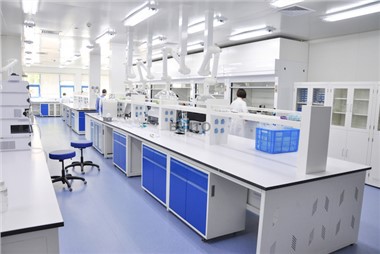

Laboratory Work Table
They provide a surface to do all your work, have sinks to wash apparatus and dispose of liquids, have utility connections that enable you to perform various experiments, have storage units to store the equipment ‒ and more.
Description
What is Laboratory Work Table
Laboratory Work Table or Laboratory Work Table are the biggest, heaviest, and most important objects in the room. They give support to all the experiments you do (except those that have to be done in a fume hood or don't need a table). They provide a surface to do all your work, have sinks to wash apparatus and dispose of liquids, have utility connections that enable you to perform various experiments, have storage units to store the equipment ‒ and more.
Why Choose Us
State-of-the-art Technology
We use the latest technology and tools to deliver high quality services. Our team is well-versed in the latest trends and advancements in technology and uses them to provide the best results.
Competitive Pricing
We offer competitive pricing for our services without compromising on quality. Our prices are transparent, and we do not believe in hidden charges or fees.
Customer Satisfaction
We are committed to delivering high quality services that exceed our clients' expectations. We strive to ensure that our clients are satisfied with our services and work closely with them to ensure their needs are met.
One-stop service
We promise to provide you with the fastest reply, the best price, the best quality, and the most complete after-sales service.


Uses of a Laboratory Work Table
A lab work desk is a versatile furniture enabling lab users to utilize it in a plethora of ways. Let's look at them below:
Lab benches create the surfaces to perform various experiments on. This is where almost all the work in a lab is done. Unless the experiment is such that it cannot be done on a standard horizontal surface (like determining Young's modulus), or have their own big machines, or must be done in safe workspaces like fume hood.
Lab benches are much more than just a glorified table. They have various attachments on top of them configured to the laboratory's needs. For wet labs, a lab workbench will have reagent racks on top of the desk, and sinks to wash lab apparatus and dispose of liquids. For a dry lab, there will be electrical racers on top of the table. For electronics labs, the whole workbench doubles as a powerhouse of testing and diagnostic systems.
Laboratory Work Table will have various utility connections ‒ like gas, water, and electricity lines in-built. This enables you to draw on those utility systems as required for your experiment.
Laboratory desks often have lots of storage space underneath the table. You can use them to store the equipment and glassware, paperwork, and various doodads needed for work (from paper clips to duct tapes ‒ you never know!). Indeed, if it wasn't for the under-storages in the lab workbenches, the lab would almost double in size just to store the various lab equipment, apparatus, and glassware it requires to function.
Advantages of High-Quality Laboratory Work Table
Cost-effectiveness
High-quality Laboratory Work Table prove to be cost-effective in the long run. Laboratory settings can change quickly, and the laboratory furniture may require scaling up and down accordingly.
Your expense on the high-quality tables for the laboratory ensures you can save money on repairs and maintenance of Laboratory Work Table in the future.
Durability
Spending money on high-quality Laboratory Work Table is worth it because they use the best materials. Therefore, such Laboratory Work Table last longer and require minimal maintenance, reducing future repairs and maintenance costs.
Ergonomic Design Boost Productivity
The well-designed ergonomic laboratory furniture ensures that technicians can work comfortably, avoiding injuries caused by repetitive tasks. It protects workers from issues related to their posture.
A lab with ergonomic furniture allows your employees to sit comfortably, enabling them to concentrate on their tasks and safeguarding them from potential fatigue or discomfort.
Ergonomic tables for the laboratory promote an optimal working environment by preventing long-term productivity issues.
Reconfiguration Options
With the business growth, the laboratory processes also expand, demanding you choose furniture that grows with you. It is a common practice to have adjustable height tables in labs where expansion is likely to happen.
Adjustable height Laboratory Work Table make things easier; they can be easily adjusted and changed as per the needs, making the user comfortable. It is also possible to expand into larger spaces without any need to start using new furniture.
Safety
Safety remains the priority in any laboratory environment. High-quality Laboratory Tables assure complete safety by meeting the established industry standards.
Lab settings can use volatile chemicals; therefore, every penny is worth spending on Laboratory Work Table with high quality and safety assurance.
Equip Your Lab With High-Quality Laboratory Work Table
Today, the world is modernizing its laboratory settings to match up to high standards of lab requirements. That is why labs shall be well maintained to provide everyone with a clean and productive environment.
You can integrate modular laboratory furniture into your workplace layout to enjoy the benefits of high-quality Laboratory Work Table.
Laboratory Work Table Countertop Material
Countertop material selection depends on the requirements and intended use. Common materials include epoxy resin, stainless steel, polypropylene, and phenolic resin. A needs assessment will help identify which material can provide performance and long life.
Standard & Custom Lab Bench Considerations
Depending on the work being done, staff may be seated or standing. The work surface height is generally dependent on a few factors, including operator height. Assembly work can also benefit from ensuring the proper heights and layouts are selected.
Requirements and functionality
The lab bench is where most tasks take place. Identifying the current and future needs of the lab will help determine:The appropriate workbench countertop material.
Workbench size
Mobile or stationary: If your laboratory design is evolving, a portable worktable is the best choice.
Accessories and customization: LED overhead lights, adjustable top shelving, electric hydraulic systems, cable management, cooled enclosures, sound isolation and others.
Flexibility and ease of use
Labs handle different tasks and routines daily. Benches should be adjustable and adaptable.This allows personnel to reorganize and restructure workflows.
Quality and durability
Selected materials must be appropriate and durable to handle daily use.
Frame Types:Frame types determine load capacity, legroom, and a few other features. Common types include C-frame and H-frame styles which determines where the bottom cross support beam is welded.
C-frame benches are remarkably steady and provide high load capacity. They have generous knee and legroom for sitting workstations, and can be equipped with mobile or suspended under bench units.
They are suitable as a work surface and storage area for lab work. They also provide supporting construction for analytical equipment.
The H-frame benches provide excellent stability for add-on tables, analysis, and mobile tables for seated or standing work.
The H-frame benches apply as work surface and storage area for laboratory work with optional bottom shelves available. In addition to this, they provide supporting construction for analytical equipment.
Mobile vs. Stationary:Mobile over stationary advantages includes lower costs and the ability to replace or upgrade individual elements without modifying the entire lab space. Mobile tables are equipped with your choice of caster (standard, locking or leveling) for easy relocation within the room.
Stationary lab benches are fixed to the floor or overhead structure, enhancing their ability to support heavy loads. Levelling feet are available for adjustments as needed.
Despite its disadvantages, the stationary lab bench offers the lowest initial cost. This factor is an essential consideration during the selection process.
Height Adjustable:Some models are height adjustable with pin or screw adjustments. More advanced options are available with manual crank or hydraulic lift features.
Conclusion:Investing in flexible workbenches or worktables ensure you can scale up or down quickly as projects and staffing requirements change. Always choose lab benches with simple and efficient designs that will aid in designing your lab for flexibility.

There are a variety of types of Laboratory Work Table, each with its own advantages and disadvantages. Some Lab benches are designed for specific tasks, such as weighing or measuring, while others are more versatile and can be used for a variety of tasks. It is important to choose the right bench for the task at hand, as the wrong bench can be uncomfortable and can also lead to inaccurate results.
Definition of Laboratory Work Table
There are a variety of types of Laboratory Work Table, each with its own specific features and benefits. Some benches are designed for specific types of experiments, while others are more versatile and can be used for a variety of tasks. It is important to choose the right bench for the task at hand, so be sure to research the options available before making a purchase.
Overview of the types of Laboratory Work Table
There are many types of Laboratory Work Table, each with its own specific features and benefits. Some of the most common types of Laboratory Work Table include:
Traditional laboratory bench is a sturdy, heavy piece of furniture that is typically used for performing scientific experiments. This type of bench is typically equipped with a number of features, including a surface area for working with materials, a storage area for supplies, and a comfortable seat.
Workstation bench – This type of bench is designed for use by a single person, and is typically smaller and more compact than the traditional laboratory bench. Workstation benches are typically equipped with a limited amount of storage space, but they are typically more versatile than traditional Laboratory Work Table, as they are able to accommodate a wider range of equipment and supplies.
Lab tables – Lab tablesare typically smaller and more compact than workstation benches and traditional Laboratory Work Table, and they are typically used for performing small-scale scientific experiments. Lab tables are typically equipped with a limited amount of storage space, but they are typically more versatile than other types of Laboratory Work Table, as they are able to accommodate a wider range of equipment and supplies.
Types of Laboratory Work Table
There are a variety of types of Laboratory Work Table, each with its own specific features and benefits. Some benches are designed for specific types of work, such as chemical or biological testing, while others are more versatile and can be used for a variety of tasks. It is important to choose the right bench for the task at hand, as improper use can lead to injuries.
Standard Benches
There are a variety of types of Laboratory Work Table, each with its own specific features and benefits. Some benches are standard, while others are specifically designed for specific types of experiments. It is important to choose the right bench for the task at hand, in order to ensure accurate and consistent results.
Mobile Benches
There are a variety of types of Laboratory Work Table, depending on the needs of the laboratory. Some benches are designed for use with specific equipment, while others are more versatile and can be used for a variety of tasks. It is important to choose a bench that is comfortable and will meet the specific needs of the laboratory.
Wall-Mounted Benches
There are a variety of types of Laboratory Work Table, depending on the needs of the laboratory. Some benches are wall-mounted, while others are portable. Some benches are designed for specific types of work, such as chemical or biological work.
Custom Benches
There are a variety of types of Laboratory Work Table, each with its own benefits. Some benches are designed for specific tasks, such as weighing or measuring, while others are more versatile and can be used for a variety of tasks. It is important to choose the right bench for the task at hand, as improper use can lead to injury.
Benefits of Different Types of Laboratory Work Table
There are many different types of Laboratory Work Table, each with its own unique benefits. Some benches are designed for specific types of work, such as chemical or biological labs. Others are more versatile and can be used for a variety of tasks, such as histology or microbiology. It's important to choose the right bench for your lab work, so be sure to research the different types available before making a purchase.
Standard Benches
There are a variety of types of Laboratory Work Table, each with its own specific features and benefits. Standard benches are typically the most affordable and widely available, but they may not be the best option for specific applications. For example, a bench that is specifically designed for wet lab work may be more appropriate. Lab benches can be a critical component of any lab, and it is important to choose one that is specifically suited to the tasks that will be performed. By understanding the different types of benches available, and choosing the one that is best suited for the specific needs of the lab, scientists can maximize their productivity and ensure that their experiments are accurate and reliable.
Mobile Benches
There are a variety of types of Laboratory Work Table, each with its own specific features and benefits. Some benches are designed for use in a laboratory setting, while others are more versatile and can be used in a variety of settings, such as a home lab. It is important to choose the right bench for the task at hand, as the wrong bench may not be able to accommodate the equipment and supplies that you need.
Wall-Mounted Benches
There are a few different types of Laboratory Work Table, each with its own benefits. Wall-mounted benches are the most common type, and are perfect for smaller labs. They're easy to move around, and can be mounted on the wall or on a stand. They're also affordable, and can be used for a variety of purposes. Benchtop benches are another popular type. They're larger than wall-mounted benches, and are perfect for labs with a lot of equipment. They're also more expensive, but they offer a lot of benefits. Benchtop benches are easy to clean, and they're perfect for working with large pieces of equipment. Finally, there are lab benches designed specifically for scientific experiments. These benches are designed to support heavy weights, and they have special features to help you work more efficiently. They're also more expensive than other types of benches, but they're worth the investment.
Custom Benches
There are a variety of types of Laboratory Work Table, each with its own specific features and benefits. Some benches are designed specifically for chemical or biological experiments, while others are more versatile and can be used for a variety of tasks. It is important to choose the right bench for the task at hand, as the wrong one may not be able to accommodate the equipment and materials you need.
There are many types of Laboratory Work Table, but the most common are the lab bench with a work surface and the lab bench with a storage area. Some benches have a built-in light and a microscope mount, while others have a built-in sink and a refrigerator. It is important to choose a bench that is comfortable and fits the needs of the lab.
The importance of Laboratory Work Table for science laboratories
Laboratory Work Table are an indispensable tool in science laboratories; these benches provide a variety of utensils and products essential for the execution of successful experiments, Laboratory Work Table help us to do our work efficiently and safely, which in turn saves us time and money.
Sampling specimens, preparing and storing reagents and chemicals are some of the main functions performed by Laboratory Work Table.
Specialists benefit from using Laboratory Work Table because they do not need to move from one place to another for the supplies they need
These benches contain a variety of laboratory items, such as the equipment, materials and customization needed for each laboratory, as well as a range of chemicals suitable for all types of experiments.
Some lab benches offer a wide variety of products such as pipettes, precision tools, mixers, flotation equipment, high and low purity reagents, laboratory equipment and cleaning materials.
This extensive variety means that the laboratory can find all the items it needs without the need to go from place to place to find the right items.
Advantages generated by lab benches to medical specialists
Likewise; some lab banks also offer customized services to meet the specific needs of the laboratory, these services include supplying materials, equipment and products to meet the specific research needs of the laboratories.
This ensures that the lab gets the right products in the exact quantity it needs, in order to save time and reduce costs, lab banks also allow us to make a secure purchase.
Organization and time savings with the use of laboratory banks
These stores offer a variety of chemicals at reasonable prices and can offer us expert advice on how best to store, handle and use the products safely; this allows us to perform experiments with reliable and safe results in a safe laboratory.
Lab benches also help us keep our lab properly organized; they provide us with the space and resources needed to store, organize and distribute lab materials efficiently.
Benches save you time and money by ensuring that all necessary items are made available and that work is performed with a maximum level of safety
On the other hand; this allows us to perform experiments more easily and safely, since we have all the necessary items to perform our work, lab benches are an essential tool for science labs.
In short; these benches are designed to meet the wide range of laboratory needs, offering top quality products and customized services to ensure the success of the experiments.
Laboratory Work Table and Their Countertop Materials
As discussed earlier in our previous blog posts related to Physics, Chemistry, Biology, and Composite laboratories, workbench requirement of each varies. While Chemistry and Biology deal with corrosive chemicals needing chemical resistant fireproof setup, Physics requires a more sturdy scratch proof setup. Similarly, Chemistry and Biology lab needs reagent racks to store glassware and chemicals for freeing up working table space and to prevent accidental spillage and breakage, Physics lab requires raceways for power sockets required in various experiments.
Before diving further into tabletop materials lets discuss some of the attributes of lab workbenches:
Workbenches are mostly rectangular in shape, with the flat smoother surface with edge binding
A standard height for comfortable usage predefined by age (as the height of school children and adult varies) and mode of working in sitting or standing position
Provisions for storing extra equipment and easy access
The work surface should be hygienic, easy to clean, chemical and stain resistance and should last long
Traditionally, workbenches were made of many different materials including metal, wood, stone, and composites depending on the requirements of the laboratory.Following materials are generally preferred:
Medium-density fibreboard (MDF)
Medium-density fibreboard (MDF) is an engineered wood product. For making MDF board, hardwood/softwood particles are broken down into wood fibers then combined with adhesive material and are made into predetermined panels by applying high temperature and pressure. The composition varies depending upon the specification but on a standard level, it is typically made up of 82% wood fiber, 9% urea-formaldehyde resin glue, 8% water, and 1% paraffin wax. Due to subjected pressure and temperature, materials fuse and gets compressed resulting in a denser and stronger product as compared to plywood.
Advantages of MDF
Isotropic in nature meaning its properties remain the same in all directions due to lack of grains
Consistent in strength and size throughout its cross-section
Shapes well and can be formed into desired shapes
No expansion or contraction over time if sealed around edges
Ply Laminate
Ply Laminate is plywood with a laminate of a particular color or design pasted on top of it. Thin layers of wood mixed with adhesive are placed alongside & on top of each other keeping grain alignment in a particular direction. This assembly is then applied pressure via bench press to form sheets. The entire sheet has a grain alignment in a particular direction. Again these sheets are stacked with grains alignment is different directions along with a top layer of the laminate. The same process of applying adhesive and stress via bench press is repeated.
Advantages of Ply Laminate
Moisture resistant
Workable into desirable shapes
Consistent in strength and size throughout the cross-section
Chemical Resistant
Durable
Granite
Granite has been a popular choice for countertop material. It is an igneous rock with a low level of permeability making it moisture resistant. It is nearly always massive, hard and tough, and therefore it has gained widespread use throughout human history as a construction stone. With a very high melting temperature of 650 degrees Celcius, it has excellent temperature resistant.
It is, however, prone to etching that is dulling of granite top surface due to reaction with acids.
Advantages of Granite
Moisture resistant
Consistent in strength and size throughout the cross-section
Durable
Excellent temperature resistance
Phenolic Plywood
A phenolic board is made by subjecting phenolic resins on plywood forming a glossy layer on the top resulting in higher strength than the base material. It is also resistant to water, chemical and scratch.
When Phenol (C2H5OH) is combined with Formaldehyde, it produces a phenolic resin.
This resin is then used along with a sheet of paper to cover both sides of the desired plywood. Upon subjection to high temperature and pressure, phenolic resins act as thermosetting compound and get homogeneously reinforced with cellulose fibers of plywood to give Phenolic Boards. Upon subjection to heat and pressure, phenolic resin combines with cellulose fibers resulting in a smooth, glossy and very tough surface.
Advantages
Higher level of chemical resistance
Moisture resistant
Shapes well and can be worked into desirable shapes
Hygienic, odorless and easy to clean
Consistent in strength and size throughout the cross-section
Durable
Epoxy Resins Board
An Epoxy Resins Board, used in making countertops, is made by subjecting epoxy resins on plywood (generally used but other materials can also be used). It forms a protective glossy layer on the top resulting in higher strength than the base material. Epoxy resins out-perform than most of the other resin types in terms of mechanical properties and resistance to environmental degradation. The finished surface provides a higher level of resistance to water degradation.
The term 'epoxy' refers to a chemical group consisting of an oxygen atom bonded to two carbon atoms that are already bonded in some way. The simplest epoxy is a three-member ring structure known by the term 'alpha-epoxy' or '1,2-epoxy'. The idealized chemical structure is shown in the figure below.
Both the liquid resin and the curing agents form low viscosity easily processed systems. Epoxy resins are easily and quickly cured at any temperature from 5°C to 150°C, depending on the choice of curing agent. One of the most advantageous properties of epoxies is their low shrinkage during cure which minimizes internal stresses and porosity resulting in improved moisture resistance. Epoxy resins are formed from a long chain molecular structure with epoxy groups as reactive sites at either end. The epoxy molecule also contains two ring groups at its center which are able to absorb both mechanical and thermal stresses better than linear groups and therefore give the epoxy resin very good stiffness, toughness and heat resistant properties. The figure below shows the idealized chemical structure of a typical epoxy.
Epoxies differ from polyester resins in that they are cured by a 'hardener' rather than a catalyst. The hardener, often an amine, is used to cure the epoxy by an 'addition reaction' where both materials take place in the chemical reaction. The chemistry of this reaction means that there are usually two epoxy sites binding to each amine site. This forms a complex three-dimensional molecular structure. You can read more about it here.
Advantages of Epoxy Resins Board
Zero VOC (Volatile Organic Content), which means no solvents or harmful odors to breathe
Creates a lifetime seamless, hard and non-porous finish which eliminates staining
No unsanitary joints or grout lines that can attract other microorganisms
Rock hard, durable, scratch & impact resistant to 15,000 psi, five times stronger than concrete
Thickness of 100 mils (2.54mm) or more, creating an extreme 3D effect
Can be used on Plywood or MDF
Our Factory
Beito Laboratory Equipment Co., Ltd. is a laboratory furniture and laboratory equipment manufacturer integrating R & D, design, manufacturing and sales.
We have a steel wood and PP workshop covering an area of 3000m2, a steel workshop covering an area of 3500 m2, and a complete set of spraying assembly lines. It is a large-scale laboratory equipment manufacturing enterprise in China,focusing on the field of high-end laboratory engineering.

Our Certificate
We have mechanical and electrical installation, decoration and laboratory furniture sales, all of which have passed the ISO9001 quality management system certification, ISO14001 environment management system certification and OHSAS18001 occupational health and safety management system certification. The above personnel and qualifications ensure the company's ability to deliver domestic leading and world-class laboratories to customers.

FAQ
Hot Tags: laboratory work table, China laboratory work table manufacturers, suppliers, factory, Lab Benches with Storage, Laboratory Working Bench, Chemistry Lab Table Design, Lab Bench with Sink, Work Bench Lab, Stainless Steel Laboratory Table