

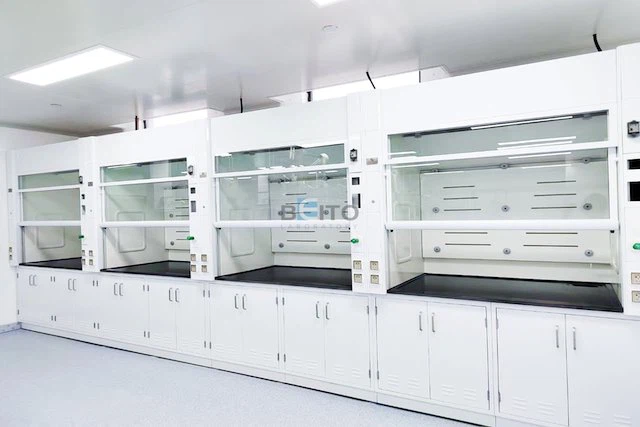
Laboratory Desk
Laboratory Desk Easy to cleanDurable and scratch resistantStrong chemicals resistantDouble level adjustment, good stability, its special composed structure can effectively prevent or reduce the influence of the external vibration, and achieve the best effect of shock.
Description
What is Laboratory Desk
Laboratory Desk Easy to cleanDurable and scratch resistantStrong chemicals resistantDouble level adjustment, good stability, its special composed structure can effectively prevent or reduce the influence of the external vibration, and achieve the best effect of shock.
Why Choose Us
State-of-the-art Technology
We use the latest technology and tools to deliver high quality services. Our team is well-versed in the latest trends and advancements in technology and uses them to provide the best results.
Competitive Pricing
We offer competitive pricing for our services without compromising on quality. Our prices are transparent, and we do not believe in hidden charges or fees.
Customer Satisfaction
We are committed to delivering high quality services that exceed our clients' expectations. We strive to ensure that our clients are satisfied with our services and work closely with them to ensure their needs are met.
One-stop service
We promise to provide you with the fastest reply, the best price, the best quality, and the most complete after-sales service.


What Are Science Laboratory Desk Made of?
If you ever worked in a laboratory, you know tables and workbenches are prime property. Scientists, like chefs in a kitchen, often complain that there's not enough counter space. Laboratory tables serve as a space for all kinds of experiments, data collection, research, and applications, and they can quickly become cluttered with various equipment such as autoclaves, circulators, water baths, pipettes, spectrophotometers, and more. Adding additional tables and workspaces can go a long way in helping improve workflow, results, and productivity. But what exactly should you be looking for in a laboratory work surface and which materials make the best lab table countertop? Let's explore the options.
What is a science lab table?
A laboratory table, also known as a workbench or simply a bench, is where scientists do a good portion of their work. You can find laboratory tables and benches in schools and universities, research centers, diagnostic labs, medical facilities, and industrial and manufacturing facilities.
Science tables, worktops, and workbenches come in a variety of configurations, sizes, and colors. Some may have a simple, flat surface while others include drawers, shelves, or cabinetry. When selecting a laboratory table, you'll want to pay particular attention to the surface material or tabletop.
Different labs have different needs, so you'll need to think about your environment and the type of experiments, materials, and applications that take place on any given day. Will the table be in a wet lab or a dry lab? Does it need to meet any special requirements, such as high-heat resistance or clean room compatibility? Will it be exposed to caustic chemicals? All of these factors must be considered when it comes to laboratory work surfaces.
Here are a few of the qualities that make a good science table countertop:
● Strength and durability
● Chemical, bacteria, and solvent resistance
● Hygienic, non-porous properties
● Easy cleaning and maintenance
● Scratch, stain, and impact resistance
● Fair cost and availability
● Appearance and aesthetics
What are the top materials for science lab tables?
Like kitchen countertops, there are many materials to choose from, so let's start by reviewing the most common science lab table surfaces and countertop materials.
Phenolic Resin
Phenolic resin is an extremely popular choice for life science and chemistry labs because it can withstand chemicals, acids, bases, salts, solvents, halogens, and other materials frequently used in a lab. Phenolic resin surfaces are made by layering kraft paper soaked in resin and processing them at high temperatures to create a lightweight solid tabletop. The manufacturing process creates a hygienic, non-porous, non-conductive surface that's durable, easy to clean, and can be formed into various shapes and sizes.
Epoxy Resin
Epoxy resin is another common laboratory material for tables and workbenches. It offers resistance to corrosive chemicals, heat, moisture, and impact damage. To create epoxy resin countertops, resin, silica, hardener, and filler are molded and oven-cured into a heavy, solid slab. The curing process makes epoxy resin impenetrable to bacteria, mold, germs, and mildew. Epoxy resin work surfaces are non-absorbent and work well in wet labs or near sinks. The material is highly durable and can tolerate high heat, including open flames. It is extremely heavy, though, so it will need a strong foundation or cabinet to support the weight of the tabletop.
High-Pressure Laminate
High-pressure laminate (HPL) countertops are crafted by combining wood fiber, phenolic resin, and melamine under high heat and pressure. The process results in an affordable, versatile general-purpose material suitable for chemical-free and dry lab facilities, such as computational, engineering, and applied physics laboratories. While HPL countertops are impact and scratch resistant and require minimal maintenance, they have some drawbacks. HPL surfaces offer low resistance to bacteria, chemicals, corrosive materials, fungi, water, moisture, and scratches. Still, for low-impact labs, including some education facilities, HPL offers an attractive, cost-effective, low-maintenance solution that can maintain its appearance for many years.
Chemical-Resistant Laminate
Chemical-resistant laminate combines some of the features of high-pressure laminate with the chemical resistance of phenolic resin. Chemical laminate combines an overlay of decorative surface paper with a melamine resin bonded to a core of kraft papers saturated with phenolic resin. The outcome is a visually appealing work surface that's durable, functional, and offers exceptional chemical resistance. Chemical-resistant laminate can tolerate temperatures up to 135 degrees Celsius (275 degrees Fahrenheit) but should not be used for high-temperature applications that exceed that limit. While the material offers chemical resistance, it is susceptible to scratches, cuts, water, moisture, bacteria, and corrosive elements-the mid-range price and chemical resistance suit low-impact labs that require good chemical resistance.
Stainless Steel
Walk into any laboratory, and you'll likely see a lot of stainless steel, from equipment to furniture and table tops. Stainless steel is durable, hygienic, non-porous, and chemical resistant. Like other steel products, stainless steel is made from iron and carbon. To achieve "stainless steel," chromium and other alloys are added to low-iron steel to create a stain-resistant anti-corrosive material. Stainless steel science tables can endure significant wear and tear and offer exceptional heat resistance. Stainless steel tables and workbenches make it easy to maintain a sterile environment with minimal dirt, dust, and contamination. While stainless steel meets many scientific laboratory requirements, it can dent or scratch over time. For a heavier-duty stainless steel table that can withstand heavy equipment and machine vibrations, you'll want to consider 14-gauge stainless steel.
What is the Standard Laboratory Desk Size?
When setting up a laboratory, one of the most important considerations is the size of the lab tables. The tables should be designed to accommodate a range of equipment and materials and should provide enough space for researchers and students to work comfortably. In this article, we will explore the standard lab table size and provide information on the different factors that influence the size and design of lab tables.
What is a Laboratory Desk?
A lab table is a piece of laboratory furniture that is used to support experiments and research activities. It is typically made of a durable material such as stainless steel, epoxy resin, or high-pressure laminate and is designed to withstand chemical spills, heat, and other hazards commonly found in a laboratory environment. Lab tables are often equipped with built-in storage, sinks, and other features that make them versatile and functional.
Standard Lab Table Sizes
The standard lab table size is typically determined by the dimensions of the room and the needs of the laboratory. The most common standard sizes for lab tables are:
600mm x 1200mm: This is the smallest standard size for a lab table and is suitable for small laboratories or individual workstations.
700mm x 1500mm: This is the most common standard size for a lab table and is suitable for most laboratory applications. It provides enough space for multiple users to work simultaneously and can accommodate a range of equipment and materials.
900mm x 1800mm: This is a larger standard size for a lab table and is suitable for larger laboratories or specialized applications. It provides ample space for multiple users and can accommodate large equipment and materials.
Factors Influencing Lab Table Size
Several factors influence the size and design of lab tables, including:
Room Dimensions: The size of the lab table is often determined by the dimensions of the laboratory. The lab table should be designed to fit within the space available and provide enough room for other laboratory equipment and materials.
Research Activities: The type of research activities being conducted in the laboratory will also influence the size and design of the lab table. Certain research activities may require specialized equipment or materials that need to be accommodated by the lab table.
User Needs: The needs of the users of the lab table will also influence the size and design of the table. For example, if the lab table is being used by students, it may need to be designed to accommodate different heights and provide easy access to materials and equipment.
Storage Requirements: The lab table may also need to be designed to provide adequate storage for laboratory materials and equipment. This may include built-in storage cabinets, shelves, and drawers.
Budget: The size and design of the lab table will also be influenced by the available budget. Customized lab tables can be more expensive than standard sizes, so the available budget may limit the size and design options.
Conclusion
In conclusion, the standard lab table size is typically determined by the dimensions of the laboratory, the research activities being conducted, and the needs of the users. The most common standard sizes for lab tables are 600mm x 1200mm, 750mm x 1500mm, and 900mm x 1800mm. Other factors that influence lab table size include storage requirements, budget, and safety considerations. When designing a laboratory, it's important to carefully consider the size and design of the lab tables to ensure a safe and functional workspace for researchers and students.
The Top Five Types of Science Laboratory Tables


Scientific discovery requires the right space and tools to succeed. You need to ensure you have the right amount of space to work with by investing in fitting laboratory tables for your needs. Perfect science lab tables will allow you to have space to place tools and your scientific recording devices. The proper lab table work space allows you to have comfort and efficiency as you work. You ought to select the right work table to fit your specific work needs. Biology, chemistry, physics and other scientific laboratory type work all benefit greatly when conducted in an excellently equipped lab. Here are the top five types of science lab tables.
Lab Table Without Storage
Features
Solid and Stable
Space
Laminated Tabletop or Stainless Steel
A simple lab table is perfect for a variety of science work. You can conduct experiments or write out data on a steady simple lab table. Basic lab tables generally have four stable legs that rest on feet with a solid grip. Some lab tables additionally have a laminated tabletop that offers some grip, depending on your work. Or if you want to step it up a notch, your work tables can be made completely of stainless steel too. And of course you can opt to have height adjustable lab tables, so you can sit or to stand depending on your work.
Every lab should have a basic simple lab table. Even if the majority of experiments performed by those in the lab require tables with more features, a simple lab table is handy to have around. It can be used as a place to set equipment and data or for books and other research materials.
Lab Table with Storage
Features
Strong Build
Steady
Laminated Surface or Stainless Steel Construction
Storage for Equipment
A simple lab table with storage is perfect for those who want to use their lab table as both an experiment surface and as a storage space for tools and other equipment. Basic science lab tables are generally similar to the design of regular lab tables, except they are equipped with storage compartments. They have stable legs and often a laminated surface that keeps the table safe from chemicals. The one difference is that they have storage as a part of the table. There is typically a shelf under the tabletop that allows for books, equipment, and research devices to be placed below. Or the workstation could have a hutch style storage compartment with shelves and doors.
Fume Hood Table and Work Station
Features
Fit for Chemist Work
Hood Handles Fumes from Liquids, Gasses, and Solid Chemicals
Stable Work Space
Fume hood laboratory tables are perfect for just about any type of science experiments and laboratory requirements. The fume hood has a filter that helps control the fumes that come from liquids, gasses, and solid chemicals. Fume hoods should be made from anti-corrosion and anti-acid materials. The best fume hood laboratory tables should have a filter, air flow meter, timer, airflow monitor, and a list of acceptable chemicals that may be used on it's surface. And depending on your needs, these types of workstations can be custom configured for your working environment.
Work Station with Storage and Sink
Features
Perfect for Biology Work
Perfect for Chemistry Work
Stable Surface
Sink Allows for Easy Clean-ups
Storage
A workstation with storage and a sink is the perfect science lab table for biology science experiments. They most certainly may be helpful for other types of chemistry work as well. These types of work stations typically have a laminated surface to work on, but depending on the environmental needs, stainless steel tables would be a suitable option too. There is usually some storage drawers within the work station, and a deep sink for easy use. Having the sink connected with the work station allows you to do quick clean-ups of experiments, or offers you a way to quickly diffuse a project gone wrong.
Portable Work Station
Features
Portable Work Space
Convenience
Storage
Portable workstation lab tables are ideal for laboratories that may need to move around experiments, research data, and equipment to other areas of their facility. When you opt to have portable work spaces in your lab, make sure they fit your needs. Portable lab tables should be easy to move with locking wheels for when they are in use. They should offer height adjustability, and some storage drawers or shelves too for portable equipment.
All in all, a portable work station is a convenient option for lab work. An item to remember with this type of science lab table, is the fact that the wheels on them make it less stable when compared to a table with sturdily built legs – so be sure to engage the wheel locks once the workstation is in place, before you begin any work.
Without lab tables and lab benches, a laboratory is incomplete. In fact, because experiments and demonstrations are carried out on top of these lab tables and benches, they personify a science lab. Lab tables are an essential component of every lab, but understanding their purpose and why each laboratory needs them is critical when deciding which science table you should purchase.
Each scientific lab is unique, with specific furniture, equipment, and normal laboratory chemicals designed to their experiments and specifications. If you're considering buying new laboratory tables for your lab, let's take a look at some of the science lab tables key features and why they're important for your lab design.
Laboratory Desk Styles
To be successful, scientific discovery requires the correct environment and equipment. By investing in the correct science lab tables for your needs, you can ensure that you have enough space to work with.
To match your lab's requirements, you should choose the correct style of science lab table for your needs. Let's take a look at the most common styles of science lab tables below.
Microscope Science Tables
A microscope is required equipment in every laboratory, which means every microscope must be placed on a stable bench. On the other hand, the table must be a dedicated microscope table designed for that purpose, making it ideal for these instruments.
Microscope tables should also be made to match the user's needs, not just the microscopes, to provide a great deal of comfort, allowing your workers to be more productive and efficient.
Balance Science Tables
Balance tables are designed to give superior stability for lab equipment that is extremely sensitive. To ensure utmost security, each of our balance tables is constructed with a solid epoxy or marble equilibrium and unique heavy gauge steel frames, as well as anti-vibration surfaces designed exclusively for precision laboratory instruments.
Solid epoxy or marble balance science lab tables, as well as custom heavy gauge steel framed tables with epoxy resin surfaces, are available for you to choose from for your laboratory. Marble balance tables provide the most stable, anti-vibration surface conceivable, while solid epoxy balance tables give properly calibrated equipment more stability.
Laboratory Workbenches
The laboratory workbench is the most frequent lab component present in all types of labs. During experiments and other laboratory tests, laboratory workbenches are platforms where instruments and equipment are placed. This means that carrying out numerous experiments is nearly difficult without them.
Laboratory workbenches and workstations are designed to handle a wide range of laboratory uses and come in various work surface solutions, such as high-pressure laminate, epoxy resin, stainless steel, and a variety of other materials.
Stainless Steel Furniture
Stainless steel lab furniture offers an unequaled durability level and is fairly strong, and maintains its shape over time. It also offers superior resistance to significant impact and structural damage, and its stiffness is maintained across high temperatures of about 1400 degrees Fahrenheit. In addition, unlike other typical materials like wood, grooved plastic, and other metal alloys, stainless steel maintains a smooth and level surface with ease.
Laboratory Island
Lab islands are designed and outfitted to boost lab productivity and efficiency. Aside from providing an excellent work surface, laboratory islands are convenient and ergonomically constructed for laboratories of all types, with additional options such as worksurface options, gooseneck faucets, and sink bowl options.
Casework Cabinets
Casework cabinets are another important component of any lab, which means you'll need the right cabinets to keep your equipment and conduct your work to create a productive, useful lab. While lab equipment is normally kept in cabinets, casework cabinets are technically considered equipment in and of themselves because they are required in every lab.
When it comes to casework cabinets, you should look for a number of things. Because a lot of equipment will be stored inside, casework cabinets must be durable, especially the shelves, doors, and drawers on proper casework should be double-walled for a stable and secure closure, and every door should also have rubber bumpers installed to ensure that it closes silently.
Fume Hoods
Working in a lab can swiftly expose you to a variety of toxic, flammable, corrosive, or otherwise harmful vapors, fumes, and specks of dust. Fume hoods are common lab equipment that can help to reduce inhalation exposure to these dangerous substances and are the first line of defense against major laboratory hazards, which are divided into four categories: toxic vapor inhalation, chemical absorption, chemical burns, thermal burns, fires, and explosions.
Fume Extraction Systems
Fume extraction systems are vital to ensure employee safety at all times, regardless of the work environment, lab experiments, or science classroom. Fume extraction systems should be close to the source of pollution, making them particularly effective at removing harmful pollution such as chemical vapors, gases, smoke, and dust.
Components of Science Tables
To achieve the best lab results, any experiment or discovery requires the utilization of science lab tables outfitted with all the components your laboratory needs. The qualities of the table are what assure the functionality of lab tables in such a precision-demanding work environment.
Science lab tables contain a variety of components to meet the particular needs of the lab environment they are used in. Let's take a look at a few things you will see in some of the most common lab table components below.
Adjustable Leveling Glides
Adjustable leveling glides are additions to science table legs and other furniture products that have an adjustable design to increase contact with the floor surface for wobble-free installation on uneven floors.
Adjustable Shelf
An adjustable shelf is a shelf that may be placed in a storage cabinet or frame in a variety of pre-determined settings. The adjustable shelf is put atop the pins at the desired location, and shelf pins or pegs are moved to the pre-set locations indicated by the pre-drilled holes on the inner side panels of the storage compartment.
Built-In Book Compartments
Built-in book compartments are open-front book-sized compartments built into the frame of laboratory tables beneath the surface for out-of-the-way use, boosting safety in science labs and classrooms.
How Science Lab Furniture Contributes to Successful Experiments
In the world of scientific research, every detail matters. From the accuracy of measurements to the sterile conditions of a lab environment, every component plays a critical role in the success or failure of an experiment. Among these components, science lab furniture often takes a back seat in discussions. However, quality lab furnishings can dramatically impact your experiments' efficiency, safety, and overall success.
What are some essential science lab furniture?
Essential science lab furniture includes lab benches or workstations, safety stations, fume hoods, storage cabinets for chemicals and equipment, ergonomic chairs or stools, specialized tables for precision instruments, and sinks for cleaning and certain experiments.
Fundamental Furniture for Different Types of Science Labs
Chemistry Lab
- Lab Benches/Workstations: These should be chemical resistant, easy to clean, and have gas, water, and electric hookups.
- Fume Hoods: Crucial for chemistry labs due to the frequent use of volatile or hazardous substances.
- Chemical Storage Cabinets: These should be specifically designed for the types of chemicals being stored (flammable, corrosive, etc.).
- Sink Stations: Necessary for cleaning glassware and certain experiments.
- Safety Stations: Eyewash stations and emergency showers are particularly important in chemistry labs.
Biology Lab
- Lab Benches/Workstations: These need to be easy to clean and might need water, gas, and electric hookups.
- Biological Safety Cabinets: These are needed when working with biohazardous materials.
- Microscope Tables: Many biological studies require the use of microscopes so dedicated tables could be necessary.
- Refrigeration Units: These are often needed for storing samples or reagents.
- Sink Stations: Necessary for cleaning glassware and certain experiments.
Physics Lab
- Lab Benches/Workstations: These should be sturdy and spacious to accommodate a wide range of experiments and equipment.
- Anti-Vibration and Isolation: Tables are often necessary for sensitive experiments involving optics, lasers, or precision measurements.
- Equipment Racks: Physics labs often have a lot of electronic equipment that can be stored on dedicated racks.
- Computer Stations: Much of modern physics involves data analysis, so dedicated computer areas can be important.
- Laboratory Furniture: More Than Just Tables and Chairs
When we think of science lab furniture, the image that most likely comes to mind includes traditional laboratory stools and standard work tables. But the role of lab furniture extends far beyond providing a place to sit or a surface to work on.
High-quality lab furnishings can also make a substantial difference in maintaining a sterile and well-organized environment. Having the right lab clearance equipment, such as biosafety cabinets, fume hoods, and well-designed storage systems, ensures that labs remain clutter-free and safe.
These pieces of furniture provide storage and essential functions, such as air filtration or secure containment of hazardous materials, contributing to the success of experiments and the safety of lab personnel.
Invest in Success | Comfort and Efficiency in Science Furniture
Comfort and efficiency in science furniture design can also greatly contribute to successful experiments. For instance, ergonomically designed laboratory stools and adjustable work tables can significantly increase the comfort level of lab staff. As comfort levels increase, so do productivity and accuracy in experiments. Poorly designed or uncomfortable furniture can lead to fatigue and mistakes, potentially compromising the results of an experiment.
Investing in high-quality science lab furniture is an investment in successful experiments. Proper lab furniture facilitates efficient workflows, promotes a safer working environment, and improves comfort levels. All these factors can impact the accuracy and repeatability of scientific experiments.
So, the next time you are considering an upgrade to your lab, remember that even the seemingly secondary components like lab furniture can make a significant contribution to your experimental success.
Our Factory
Beito Laboratory Equipment Co., Ltd. is a laboratory furniture and laboratory equipment manufacturer integrating R & D, design, manufacturing and sales.
We have a steel wood and PP workshop covering an area of 3000m2, a steel workshop covering an area of 3500 m2, and a complete set of spraying assembly lines. It is a large-scale laboratory equipment manufacturing enterprise in China,focusing on the field of high-end laboratory engineering.

Our Certificate
We have mechanical and electrical installation, decoration and laboratory furniture sales, all of which have passed the ISO9001 quality management system certification, ISO14001 environment management system certification and OHSAS18001 occupational health and safety management system certification. The above personnel and qualifications ensure the company's ability to deliver domestic leading and world-class laboratories to customers.

FAQ
Hot Tags: laboratory desk, China laboratory desk manufacturers, suppliers, factory, Stainless Steel Laboratory Table, Mobile Laboratory Benches, Work Bench Lab, Portable Fumehood, Modular Lab Benches, Laboratory Instrument Table


