


Duct Fume Hood
A Ducted Fume Hood is a type of ventilation system that primarily functions to provide personnel protection against toxic fumes, vapors, and dust. This containment device is connected to a ducting where contaminants pass before being exhausted into the environment.
Description
What is Duct Fume Hood
A Ducted Fume Hood is a type of ventilation system that primarily functions to provide personnel protection against toxic fumes, vapors, and dust. This containment device is connected to a ducting where contaminants pass before being exhausted into the environment.
Why Choose Us
State-of-the-art Technology
We use the latest technology and tools to deliver high quality services. Our team is well-versed in the latest trends and advancements in technology and uses them to provide the best results.
Competitive Pricing
We offer competitive pricing for our services without compromising on quality. Our prices are transparent, and we do not believe in hidden charges or fees.
Customer Satisfaction
We are committed to delivering high quality services that exceed our clients' expectations. We strive to ensure that our clients are satisfied with our services and work closely with them to ensure their needs are met.
One-stop service
We promise to provide you with the fastest reply, the best price, the best quality, and the most complete after-sales service.
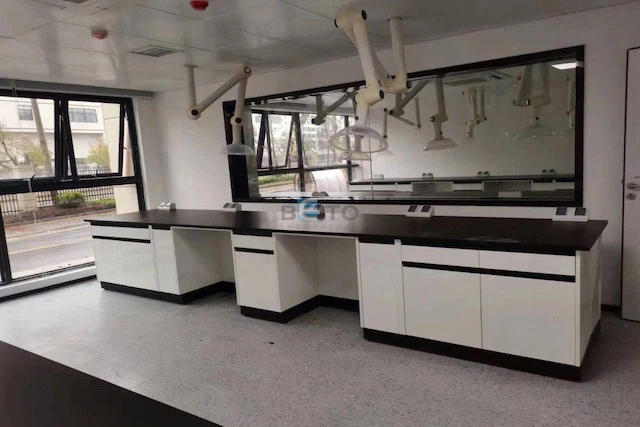
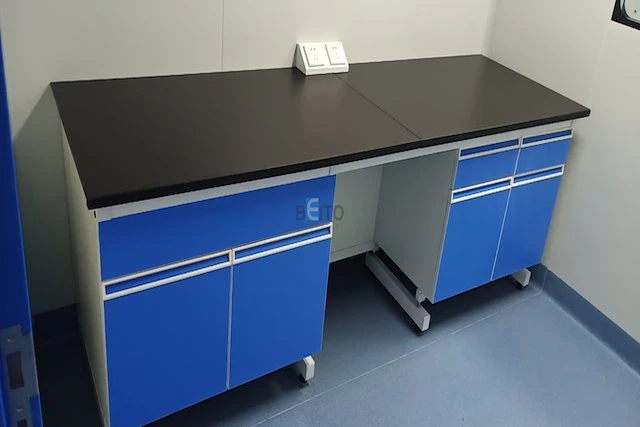

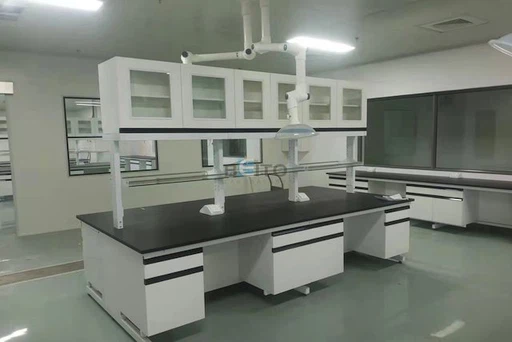

Ducted fume hoods are ventilation systems with the primary function of exhausting chemical fumes, vapors, gases, dust, mist, and aerosols. Its secondary function is to serve as a physical barrier and provide the operator protection from chemical spills, splashes, exposure, run-away reactions, and fires.
Essential parts of a ducted fume hood
Sash
A sliding window that can be adjusted to maximize the hood's capture efficiency. Most hoods are marked with an optimum sash configuration during operation.
Face
The space between the bottom of the sash and work surface where the hood face velocity is measured.
Airfoil
Streamlines airflow into the hood and prevents the formation of turbulent eddies that can carry vapors out of the hood.
Worksurface
Constructed from ceramic, epoxy, phenolic, polypropylene, stainless steel materials. Some designs use a laboratory benchtop, or the floor for floor-mounted hoods.
Exhaust
Helps distribute airflow evenly across the hood face.
Baffles
Keep the airflow uniform across the hood opening and optimize capture efficiency.
Hood body
Serves as the containment of hazardous fumes, gases, and vapors.
Exhaust collar
Connects the fume hood to the ducting system.
How ducted fume hoods work
The general airflow of a fume hood has the air enter from the face of the hood and out through the exhaust collar. An exhaust fan connected to the ducting system pulls air and unwanted substances away from the operator, out of the hood body, and exhausts them to the atmosphere.
The sash is set at the optimum configuration to maintain the recommended face velocity of 0.3 – 0.5 m/s. The airfoils and the baffles are added features that aid in the airflow.

Every lab is unique. That's why fume hoods come in a wide variety of sizes and functionalities so that you can find one that fits your exact needs. When comparing fume hoods, here are some of the different types to consider:
Ducted fume hoods: A ducted fume hood connects to your building's HVAC system, which then carries the air outside. When choosing a ducted fume hood, it will be necessary to work with your building's infrastructure team to ensure the ventilation system can provide the required volume of air to ventilate the hood properly. Because the ducted fume hood is connected to your duct system, keep in mind that you may have limited options as to where you can place the unit.
Ductless fume hoods: A ductless fume hood is a freestanding unit that does not require your building's HVAC system. Instead, the hood uses a carbon-based filter to absorb fumes and vapors. The filtered air then recirculates back into the workspace. A secondary particulate-trapping HEPA filter can be added after the carbon filter to provide exhaust air suitable for cleanroom applications. Unlike a ducted fume hood, a ductless fume hood can be placed anywhere and easily moved.
Light-duty hoods: These smaller, basic hoods are used to vent non-toxic materials such as heat, steam, odors and smoke.
Specialized hoods: There are several fume hoods available for specialty applications. Acid digestion hoods are built with chemical-resistant materials to avoid corrosion, while radioisotope hoods are built out of stainless steel to prevent the absorption of radioactive materials. For educational settings, full-view hoods have transparent backs and sides for enhanced visibility when conducting demonstrations or monitoring students, along with multiple openings so students can work from both sides of the hood.
Ducted Fume Hoods vs Ductless Fume Hoods
Businesses use laboratories in a multitude of ways these days. And, with tight budgets, limited square footage, changing business dynamics and safety considerations involved, businesses sometimes struggle when it comes to purchasing lab furniture.
One important decision comes when it's time to purchase a chemical fume hood for your new laboratory or during a redesign.
And, let's be honest, the stakes can be high. Just check out this article about a tragic laboratory accident at UCLA to see the potential consequences of working in a fume hood.
The Standard - Ducted Fume Hood
Ducted-fume-hoodsDucted fume hoods have ventilated enclosures, operate within the framework of your building infrastructure and pull contaminants out of your building through the HVAC system.
Ducted fume hoods have a base, work surface, hood, blower and ducting that carries the air outside of the building. The engineer of the heating, ventilation and air-conditioning (HVAC) system needs to determine if your room has enough air to provide the necessary volume of ventilation to the hood.
The maintenance of the fume hood is performed as part of the building's maintenance, and is generally performed by those in charge of the mechanical systems. Typically, the Maintenance or Environmental Health and Safety team take care of any issues.
Your HVAC engineer can work with your team to provide optimal air supply and balance, so that everything functions properly within the fume hood.
Ducted fume hoods are considered safest for workers in laboratories, and its often the easiest for employers to maintain. Many universities ONLY allow ducted fume hoods in their facilities to maintain worker and student safety.
Advantages and Disadvantages of Ducted Fume Hoods
| Advantages | Disadvantages |
| Safer for lab workers | More expensive |
| Can handle a wide range of chemicals | More difficult to install |
| Easy to operate and maintain | Stationary in the lab |
| Exhaust system keeps contamination outside lab | More difficult to move or relocate |
| Uses more energy |
The Alternative - Ductless Fume Hoods
Ducted-fume-hoodDuctless fume hoods operate off a carbon filter system that recirculates filtered air into your building. Ductless hoods are often referred to as re-circulating range hoods. They filter the air and then return the clean air back into the workspace. They are self-contained filtered laboratory enclosures. Their primary features are mobility, they save energy, are easy to install and cheaper because no ductwork is required.
The disadvantage is that workers are at a greater risk of chemical exposure, filter maintenance is required, they can be noisy due to the internal blower and there are limited applications for filter options.
Ductless fume hoods are ideal for labs that require mobility, handle light to moderate chemical loads and are looking for a cost-effective option from both an installation and operational perspective.
Advantages and Disadvantages of Ductless Fume Hoods
| Advantages | Disadvantages |
| Less expensive | Handles Limited chemicals |
| Easy to install | Need to replace filters |
| Mobile in the lab | Not as effective at removing chemical fumes |
| Easily moved or relocated | Not for constant use |
| Use less energy |
Is A Ducted Fume Hood or Ductless Best for My Laboratory ?
So, how do you determine which is the right fume hood for your laboratory...ducted or ductless?
Here are some questions to ask yourself:
- Do you work with more than 10 different chemicals?
- Are you working with small or large volumes of chemicals?
- Does your lab have a high volume of inexperienced people working with chemicals, such as a university lab?
- Does your building have an HVAC system and a team to manage it?
- Is mobility necessary for your operation?
- Do you have techs that can properly maintain a system, e.g. changing out filters?
- Will the chemicals you are using adequately filter through carbon?
Answering these questions about how you work with chemicals in your lab will help you determine the appropriate application for your needs.
Laboratory safety and workload should be the primary deciding factors in your decision. In a ductless fume hood, there should be no extreme heating, no more than 10 chemicals should be used per application, small volumes of chemicals should be used (approximately 500 mls or less) and exposure time should be within 2-3 hours per day.
There are a range of filters that have different chemical trapping capacities, but if your application doesn't match available filters you'll be required to move forward with a ducted fume hood. Talk to your fume hood provider about the various filters for chemical groups.
Lastly, determine how often you will be replacing your carbon filter, this will also give you a more accurate financial cost. Keep in mind that the filter life depends on the chemicals used, evaporation rate, chemical volume, duration of usage and the temperature of the chemicals.
Fume Hood Safety Considerations
Regardless of which type fume hood you choose, safety is always important. Fume hoods, when used properly, help protect lab employees and students working with toxic or volatile chemicals and compounds.
The fume hood serves as a physical barrier between the employee and the harmful fumes, fires, explosions and spills that might result from handling or experimentation. Because of this, fume hood safety is extremely important and can help protect your employees and student workers from injury.
Even though fume hoods are designed to protect against unexpected reactions of volatile chemicals, laboratory workers must serve as the first line of defense against. The equipment can only perform and protect if used properly.
Laboratory Fume Hood Installation & Blower Selection
A laboratory fume hood is a ventilated enclosure that captures, contains, and exhausts toxic or harmful fumes or vapors. It minimizes inhalation and contact, thus providing a safe working environment.
One overlooked – yet crucial – step when selecting and installing a fume hood is the blower and associated ductwork.
In ducted hoods, a blower pulls air from the laboratory into and through the hood. It then pushes contaminated air through the exhaust system to the atmosphere via ductwork. Thus, all components work simultaneously to ensure the optimal performance of the hood.
Fume hood blowers are available in different styles, sizes, and materials and can handle varying chemical resistance, airflow, and static pressure.
Selecting a suitable blower is critical to maintaining the safety and containment of your fume hood. It will also ensure the superior performance and long life of your blower when subjected to chemical atmospheres.
What does the typical fume removal system look like?
A typical fume removal system captures and exhausts contaminants or toxic fumes from working with hazardous chemicals or biohazards.
- There are two types of fume removal systems: Ducted and ductless.
Ducted fume hoods connect to the building HVAC system and use it as the exhaust vent. They have an exhaust blower that pulls laboratory air into and through the hood, and ducting carries air outside the building offering maximum protection.
Ductless fume hoods exhaust contaminants by moving air through HEPA or ULPA filters and recirculating it through the lab. While ductless fume hoods are economical and easy to install, they have a more limited range of chemical removal. Thus, ducted ventilation systems are popular in labs that undertake a wide variety of applications.
The figure below depicts a typical fume removal system. When purchasing a fume hood, all of the ductwork and blower components must be considered and potentially installed onsite.
Laboratory fume hood installation process
Installation of a new fume hood (chemical fume hoods or biosafety cabinets) or replacing old ones requires careful planning and knowledge of the existing building ventilation systems and capabilities.
Fume hood installation requirements include:
- Location requirements: The lab layout and fume hood location are critical for optimal performance and minimal interference. Install hoods away from constant traffic patterns, doors, windows, fans, or any air-handling devices that could disrupt its airflow patterns.
- Support or work surface requirements: Some chemical hood designs require that you place them on top of workbenches. In contrast, others come with work surfaces designed with this compatibility. If you have an existing workstation, ensure it is of the appropriate size, material, and strength for your needs. A floor mounted fume hood may have completely different requirements.
- Ductwork requirements: Installing a ducted fume hood requires fitting ductwork and deciding on a mechanical system. The systems can either have constant air volume (CAV) or variable air volume (VAV). CAV systems exhaust a steady volumetric flow of air. In contrast, VAV systems may incorporate valves or dampers to lower air volumetric flow, resulting in energy savings.
- Electrical power requirements: Every hood comes with its own set of requirements. These must be strictly adhered to, so as not to compromise electrical safety and impair protection.
- Blower requirements: The purpose of fume hood blowers is to control airflow into and through the hood. There are two fume hood blower configurations: a built-in and remote.
A built-in blower mounted on the laboratory hood is economical and easy to install. It is ideal for short, straight duct runs and low toxicity applications. However, it is noisier than the remote installations. Remote blowers are typically located on the rooftop and pull air through the ductwork to be exhausted outside.
Remote blowers are most popular compared to built-in blowers because:
Built-in blowers don't meet ANSI Z9.5: Clearly states that lab exhaust fans shall be located physically outside the lab building. Preferably on the highest-level roof of the building served.
Remote blowers are failsafe. For example, if there is a leak in the ductwork, the ductwork is kept under negative pressure. Clean air will be pulled through the leak and exhausted instead of pushing contaminated air out of the leak. Built-in blowers are not a one-size-fits-all, and they are loud.
How to choose the right fume hood blower
The type of application often dictates what type of blower to use. For example, the epoxy-coated steel blower is only ideal for venting non-toxic materials. If you deal with volatile chemicals, acid-resistant blowers made from PVC, polypropylene, or fiberglass-reinforced plastic would be best.
Factors to consider when choosing a blower are:
Construction material: What chemical fumes will be present in your lab? Blowers come in different materials that withstand various conditions. The common types of materials include:
- PVC: These blowers are suitable for perchloric acid and other highly corrosive applications.
- Steel: These work best for low to moderately corrosive applications. For example, the Labconco coated steel blowers offer a broad spectrum of capacities from 300 to 2150 CFM at static pressures to 1.50″.
- Fiberglass: These are best for moderate to highly corrosive conditions because it is more solvent and acid-resistant. Fiberglass and plastic blowers are also ideal if you work with volatile or explosive material because they are explosion-proof. They are offered in a range of capacities from 250 to 3500 CFM at static pressures to 4.0″. Fiberglass is the standard material of choice if future applications are unknown. Choose a blower material that matches the liner of your fume hood and is compatible if you are in doubt about which would be suitable.
Fiberglass is the standard material of choice if future applications are unknown. Choose a blower material that matches the liner of your fume hood and is compatible if you are in doubt about which would be suitable.
Sizing Your Fume Hood Blower
The fume hood blower sizing is critical to the performance of the hood. A weak blower will not effectively remove contaminated air. At the same time, an extra-strong one could overpower the ductwork and create turbulence around equipment or containers.
Fume hoods and ductwork systems create static pressure (resistance to airflow) measured in inches of water gauge (WG). A variety of factors that impede the free flow of air cause this resistance. They include the presence of air supply diffusers, duct diameter, length of the ductwork, number of elbows in the ductwork, and the degree of the elbow bend.
To determine the right size for your blower, provide answers to the following:
What is the duct diameter in inches?
What is the total length in feet of the straight duct run?
What is the number of 900 and 450 bends and elbows?
Typically, at least one 90-degree bend is at the roof penetration, and 3-5 duct diameter lengths (approximately 3-5 feet) between elbow and blower are required.
CFI offers Thermoplastic Ducting in 10 ft. lengths if you have a facilities team capable of installing or we could partner with a General Contractor/HVAC relationship to provide you with a turnkey solution.
What type of weather cap will be required?
What's the operating temperature and altitude from sea level?
Is the roof warrantied?
What are the implications of cutting a hole and hiring a competent installation crew?
The answers will help you determine the required face velocity, hood sash height, volumetric rate, and static pressure. Manufacturers provide this information for each fume hood, thus, you can then match your requirements to help you find the right-sized blower.
- Operating speeds: Two different types cover a wide range of applications:
- Belt-driven: This single-speed piece of equipment works best for labs that operate CAV fume hoods.
Intelli-sense multi-speed blower offers up to three speeds. It is suitable for small labs looking for energy efficiency to alleviate the burden of high energy costs.
- Accessories: You may add accessories to your system to help your fume hood and blower to operate at optimum levels. These may include a manual duct damper to control airflow, a zero pressure weather cap to exhaust air vertically without stoppage, and an airflow monitor. Some applications may require wash-down systems to neutralize acid remnants.
The Difference Between Ducted Fume Hoods and Mobile Filter Systems


And When A Ductless Fume Hood Is The Right Type of Industrial Air Ventilation System For You
Regardless of profession or industry, the need for clean air is vital to a worker's good health. Using an industrial air ventilation system will ensure that the air you and your workers breathe is clean and fresh and devoid of pollutants, but knowing which type of air cleaning product to use can be difficult without understanding the purpose behind the different systems.
Many industrial applications require the use of a fume hood to collect and exhaust hazardous fumes, dust, and particulates. Conventional ducted fume hoods connect to the facility's existing ductwork and redirect contaminated air outside the building.
Ductless fume hoods also called mobile fume extractors and mobile filter systems, are all types of industrial air ventilation systems that are standalone units that filter pollutants out of the air and recirculate clean air back into a room. For these products, no existing ductwork is required to exhaust air outdoors.
Designed to be installed almost anywhere in a facility where air quality is a concern, mobile filter systems provide the same level of filtration as ducted units but offer a range of additional benefits, such as portability, ease of installation, and high efficiency.
Using a ducted fume hood makes the most sense in situations where large volumes of chemicals, VOCs, dust, and odors threaten a workplace environment.
Ductless fume hoods, by contrast, are typically needed to protect an individual or individuals in a self-contained workstation. Here are just some of the occupations that benefit from the use of portable air cleaners:
Laboratory personnel
Dentists
Welders
Art restorers
Artists
Woodworkers
Hair Stylists
Nail Technicians
At Air Impurities Removal Systems, Inc., we provide high-efficiency ductless fume hoods that maintain a high level of filtration with a compact, portable design. Our all-in-one air cleaners come in both portable and bench-top models custom-fitted to your needs.
Our Factory
Beito Laboratory Equipment Co., Ltd. is a laboratory furniture and laboratory equipment manufacturer integrating R & D, design, manufacturing and sales.
We have a steel wood and PP workshop covering an area of 3000m2, a steel workshop covering an area of 3500 m2, and a complete set of spraying assembly lines. It is a large-scale laboratory equipment manufacturing enterprise in China,focusing on the field of high-end laboratory engineering.

Our Certificate
We have mechanical and electrical installation, decoration and laboratory furniture sales, all of which have passed the ISO9001 quality management system certification, ISO14001 environment management system certification and OHSAS18001 occupational health and safety management system certification. The above personnel and qualifications ensure the company's ability to deliver domestic leading and world-class laboratories to customers.

FAQ
Hot Tags: duct fume hood, China duct fume hood manufacturers, suppliers, factory, Modular Lab Benches, Portable Fumehood, Fume Hood Design, Fume Hood Exhaust Fan, Fume Chamber in Chemistry Laboratory, Fume Hood


