

Can a Mobile Lab Bench be used for polymer experiments?
May 12, 2025
A mobile lab bench is a versatile and convenient piece of equipment that can be a game - changer in various laboratory settings. As a supplier of mobile lab benches, I often get asked whether these benches can be used for polymer experiments. In this blog post, I will delve into the details of polymer experiments, the features of a mobile lab bench, and analyze whether the two are a good match.

Understanding Polymer Experiments
Polymers are large molecules composed of repeating subunits, known as monomers. Polymer experiments can cover a wide range of activities, from simple polymerization reactions to the characterization of polymer properties such as molecular weight, viscosity, and thermal stability.
Some common polymer experiments include: - Polymerization Reactions: This is the process of combining monomers to form polymers. It can be carried out through different mechanisms such as addition polymerization and condensation polymerization. For example, the synthesis of polyethylene, one of the most widely used polymers, involves addition polymerization of ethylene monomers. - Characterization of Polymers: Once a polymer is synthesized, it needs to be characterized. Techniques such as gel permeation chromatography (GPC) for determining molecular weight, differential scanning calorimetry (DSC) for studying thermal properties, and rheology for measuring viscosity are commonly used. - Polymer Blending and Composite Formation: Mixing different polymers or incorporating fillers into polymers to create new materials with improved properties is another area of polymer research. For instance, adding carbon fibers to a polymer matrix can enhance the mechanical strength of the composite.
Features of a Mobile Lab Bench
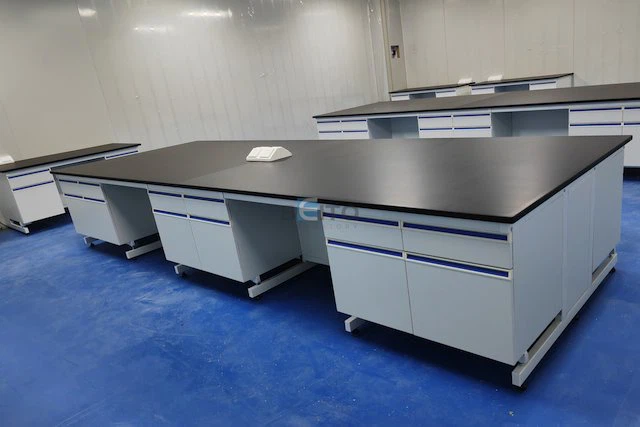
A mobile lab bench is designed to provide flexibility and mobility in a laboratory environment. Here are some of its key features: - Mobility: As the name suggests, a mobile lab bench can be easily moved around the laboratory. This is particularly useful when different experiments need to be conducted in different locations or when the laboratory layout needs to be reconfigured. - Modularity: Many mobile lab benches are modular in design, which means that they can be customized with different components such as drawers, shelves, and instrument holders. This allows for a personalized setup based on the specific needs of the experiments. - Durability: A good mobile lab bench is made of high - quality materials that can withstand the rigors of laboratory use. It should be resistant to chemicals, heat, and mechanical damage. - Ergonomics: Mobile lab benches are designed with the user in mind. They are adjustable in height to ensure a comfortable working position, which is important for long - term laboratory work.
Can a Mobile Lab Bench be Used for Polymer Experiments?
The answer is a resounding yes, and here's why:
1. Flexibility in Experiment Setup
Polymer experiments often require a variety of equipment and materials. A mobile lab bench allows for easy rearrangement of the workspace to accommodate different setups. For example, if you are conducting a polymerization reaction that requires a heating source, a stirrer, and a condenser, you can easily position these items on the bench in an efficient layout. Moreover, if you need to move the experiment to a different location for safety reasons, such as to a fume hood, the mobile bench can be quickly transported.
2. Customization for Polymer - Specific Equipment
Polymer experiments may involve specialized equipment such as GPC machines, DSC units, or extruders. A mobile lab bench can be customized with appropriate holders, power outlets, and connections to support these devices. For instance, you can install additional power strips on the bench to ensure that all the equipment has access to electricity. You can also add custom - made shelves to store polymer samples and reagents.

3. Mobility for Collaborative Research
In a research environment, polymer experiments may involve collaboration between different teams or departments. A mobile lab bench can be easily moved between different laboratories or research areas, facilitating the sharing of resources and knowledge. This mobility also allows for on - site demonstrations or consultations, as the bench can be transported to the location where it is needed.
4. Chemical Resistance
Polymer experiments often involve the use of various chemicals, including solvents, monomers, and catalysts. A high - quality mobile lab bench is made of materials that are resistant to chemical corrosion. For example, the bench top may be made of epoxy resin or stainless steel, which can withstand exposure to a wide range of chemicals commonly used in polymer synthesis and characterization.
Considerations when Using a Mobile Lab Bench for Polymer Experiments
While a mobile lab bench offers many advantages for polymer experiments, there are also some considerations to keep in mind:
1. Weight Capacity
Polymer equipment can be heavy, especially large - scale reactors or extrusion machines. Before using a mobile lab bench for polymer experiments, it is important to ensure that the bench has a sufficient weight capacity to support the equipment. Overloading the bench can not only damage the bench but also pose a safety risk.
2. Stability
When conducting experiments that involve stirring, shaking, or other mechanical movements, the stability of the bench is crucial. Some mobile lab benches may have locking mechanisms to prevent them from moving during experiments. It is important to check the stability of the bench and use appropriate locking devices to ensure a safe and stable working environment.
3. Compatibility with Safety Equipment
Polymer experiments may require the use of safety equipment such as fume hoods, fire extinguishers, and safety showers. The mobile lab bench should be compatible with these safety devices. For example, it should be able to fit easily into a fume hood or be positioned at a safe distance from fire - prone areas.
Related Laboratory Furniture
If you are interested in other types of laboratory furniture, we also offer a wide range of products. You can check out our Dental Lab Furniture, which is designed specifically for dental laboratories. Our Lab Bench Design options provide various customization possibilities to meet your unique needs. And for larger laboratory spaces, our Laboratory Island Table can be a great addition.
Conclusion
In conclusion, a mobile lab bench can be an excellent choice for polymer experiments. Its flexibility, customization options, mobility, and chemical resistance make it well - suited for the diverse needs of polymer research. However, it is important to consider factors such as weight capacity, stability, and compatibility with safety equipment.
If you are interested in purchasing a mobile lab bench for your polymer experiments or have any questions about our products, please feel free to contact us. We are more than happy to assist you in finding the right laboratory furniture solution for your needs.
References
- Odian, G. (2004). Principles of Polymerization. John Wiley & Sons.
- Stevens, M. P. (1999). Polymer Chemistry: An Introduction. Oxford University Press.
- Billingham, N. C., & Calvert, P. D. (2001). Polymer Science: A Comprehensive Introduction. Springer.