

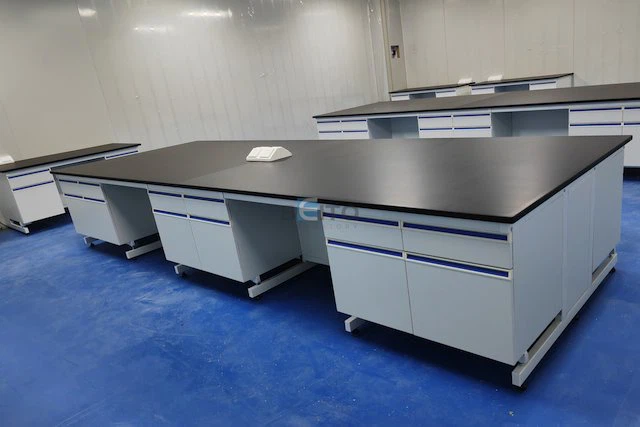
Chemistry Fume Hood
Designed to guarantee laboratory conditions and researchers remain safe at all times, the chemical fume hoods protect against flammable or toxic chemicals. Laboratory fume hoods act as protection devices that have clear sashes that slide horizontally or vertically into place and support high working visibility. Constructed for maximum chemical resistance, the leak-proof enclosures will not corrode even with heavy routine use and corrosive spills. The chemical fume hoods circulate and filter air to eliminate possible vapors produced.
Description
What is Chemistry Fume Hood
Designed to guarantee laboratory conditions and researchers remain safe at all times, the chemical fume hoods protect against flammable or toxic chemicals. Laboratory fume hoods act as protection devices that have clear sashes that slide horizontally or vertically into place and support high working visibility. Constructed for maximum chemical resistance, the leak-proof enclosures will not corrode even with heavy routine use and corrosive spills. The chemical fume hoods circulate and filter air to eliminate possible vapors produced.
Benefits of Chemistry Fume Hood
Protection
The fume hood provides protection to the user from harmful chemicals used in experiments.
Containment
The fume hood contains the chemicals being used within it so that they do not escape into the surrounding atmosphere.
Safety
The fume hood prevents accidental spills and exposure to harmful chemicals which can be a safety hazard to the user and others in the lab.
Better Experimentation
The fume hood enables experiments to be conducted in a controlled environment by preventing interference from external factors that may impact the results.
Quality results
Using a fume hood helps to reduce contamination and interference with the chemicals being used in the lab, thus ensuring quality results.
Compliance
Many industries and regulatory agencies require the use of fume hoods in their facilities to comply with environmental and safety standards.

Why Choose Us
State-of-the-art Technology
We use the latest technology and tools to deliver high quality services. Our team is well-versed in the latest trends and advancements in technology and uses them to provide the best results.
Competitive Pricing
We offer competitive pricing for our services without compromising on quality. Our prices are transparent, and we do not believe in hidden charges or fees.
Customer Satisfaction
We are committed to delivering high quality services that exceed our clients' expectations. We strive to ensure that our clients are satisfied with our services and work closely with them to ensure their needs are met.
One-stop service
We promise to provide you with the fastest reply, the best price, the best quality, and the most complete after-sales service.
Material of Chemistry Fume Hood
Stainless steel
This is a durable and corrosion-resistant material that is commonly used for high-end fume hoods. It is often used in laboratory settings where harsh chemicals are being used.
Polypropylene
This is a lightweight and chemical-resistant plastic material that is commonly used in fume hoods for applications such as acid handling.
Epoxy resin
This is a high-performance resin that is chemical resistant and can withstand high temperatures. It is commonly used in fume hoods for medical and pharmaceutical applications.
Glass
Some fume hoods are made entirely of glass, which is non-reactive and easy to clean. Glass fume hoods are best suited for applications that do not involve corrosive or hazardous chemicals.
Types of Fume Hood
Add Air Fume Hood
Conventional fume hoods primarily utilize conditioned air pulled directly from the facility's HVAC system. Add air fume hoods collect unconditioned air from outside, reducing energy costs and creating a more efficient air-in air-out cycle. Some add air fume hoods pull as much as 70% of their air from the outdoors, seriously reducing dependence on air conditioning. This is particularly convenient in winter since no temperature regulation is needed to cool artificially warmed air.
Bench-Top Fume Hood
Bench-top fume hoods do not have their own mount or support system, and instead must be placed atop an existing work surface. Bench-top fume hoods are a great choice if you are running low on floor space but still need a full-size fume hood since this type of fume hood can simply be added to an existing workspace.
Biosafety Cabinet
In labs handling viral microbes and infectious diseases, it is vital to have an enclosed, ventilated workspace to prevent lab technicians from accidental exposure and illness. All materials that could contain viral or infectious pathogens should be examined and tested within the safety of a fume hood, which will filter and release the air to prevent harmful materials from circulating through the facility.
Canopy Fume Hood
If your lab handles smelly, but nontoxic chemicals and materials, a canopy fume hood could help to reduce foul odors. Canopy fume hoods are typically suspended or wall-mounted for easy accessibility and do not include an enclosed chamber. Canopy hoods remove fumes, steam, and smoke, eliminating harsh smells and helping to regulate temperature and humidity. Appropriate for odor reduction only, canopy fume hoods do not provide the same microbial filtration as other types of fume hoods.
Chemical Fume Hood
General chemistry and chemical fume hoods are a mainstay of virtually every research and education lab and are used to reduce the risks associated with working with common chemicals and solvents. Toxic fumes, spills, chemical reactions, and airborne droplets can be harmful to human health if inhaled or ingested, and over time, prolonged exposure can have drastic consequences. As such, lab techs always perform experiments under a chemical fume hood, which pulls fumes away from technicians and filters it, removing toxicity from the air.
Demonstration Hood
Demonstration hoods (sometimes called educational hoods) are hoods designed to optimize sightlines for easy teaching demos. Demonstration hoods typically have four transparent sides to allow students to see from every angle, no matter where the teacher may be standing. Used for the same purpose as typical chemistry fume hoods, demonstration hoods differ only in their visual appearance but provide the same enhanced protection from respiratory toxin exposure.
Ductless Fume Hood
Conventional fume hoods need to be hooked up to a facility's ductwork to guide toxins outside, but not all facilities are equipped with the same ductwork and filtration. Rather than gathering air to be transported outside the facility, ductless fume hoods collect air and filter it internally using a combination of carbon and HEPA filters. Once fully filtered, ductless fume hoods release the clean air back into the workspace.
Low Flow Fume Hood
As the name suggests, low flow fume hoods use less air overall, often saving facilities up to 40% or more on their energy bills. Low flow fume hoods are great for general testing, odor elimination, and other day to day tasks, but may not be ideal for more extensive or risky testing.
Chemical fume hoods draw air out of the rooms in which they are installed. There needs to be an adequate volume of air available or the chemical fume hood will not be able to draw a sufficient volume of air to function properly. When the room is small or there are a large number of fume hoods drawing air out of a room, an additional supply of air, other than the normal room ventilation, may be required. This additional air is known as the make-up air. If the make-up air supply is not adequate or the make-up air is switched off then the fume-hoods may not be able to achieve the required face velocity (also known as the air flow rate, or rate of air exhausted by the hood). This can cause fumes to escape into the laboratory. all of the Chemistry academic labs use make-up air to replace the air the chemical fume hoods exhaust. This is why after a fire alarm in the ISC, when the make up air is automatically shut off, all the doors in chemistry academic labs become extremely difficult to open due to the much lower pressure created in the labs compared to the air in the hallways of the ISC and Greene.

Means of Ventilation
Ventilation is normally achieved by a single extractor fan powering several hoods in varying locations and on different building floors – this arrangement leaves all of these fume-hoods at risk following the failure of the single fan. The single fan also runs at a fixed speed so that extraction rate from any specific hood depends upon the open or closed state of sashes in the remaining hoods on the stack. Most of the Standard hoods have no warning of fan failure apart from physical indicators e.g. toy windmills or paper tissues rigged by the users. In the event of an Emergency Alarm, Standard fume-hoods remain in operation.

The rating performance of the fume hood must be adequate to contain the material in use effectively.
The interiors of fume-hoods must be kept tidy and not cluttered with apparatus to disrupt the flow of air. Apparatus should not encroach within 10cm of the front edge of the hood.
Any rear vents must be kept clear and free from a build-up of dust or blockage by solid material e.g. paper tissues.
Unnecessary chemicals must not be stored in a fume-hood that is actively used for chemical work.
The front sash must be kept closed as far as is comfortable while working and fully closed when not actively working.
Heads must stay OUT of the fume-hood whilst working.
To detect and be warned of any fan failure, a strip of tissue or some other visible indicator of air flow should be used.
If airflow fails for any reason, work must stop and the sashes be closed.
Factors to consider when selecting a fume hood
1. Room size (Width x depth x height)
2. Blower, Lab heat load
4. Types of materials used
5. Work Surface Height
6. Frequency of use % of time, working at hood
7. Size of apparatus to be used in hood
What are the Applications of Chemistry Fume Hood
Chemistry fume hoods are essential pieces of equipment used in laboratories to protect researchers and workers from hazardous fumes, vapors, and chemicals. They provide a controlled environment for handling and conducting experiments with potentially dangerous substances. Here are some common applications of chemistry fume hoods:
Chemical Handling and Storage
Fume hoods are used for safely handling and storing various chemicals. They provide a contained space where volatile or toxic chemicals can be manipulated without exposing the user to harmful fumes.
Chemical Reactions
Fume hoods are used during chemical reactions to prevent the release of hazardous gases and vapors into the laboratory. They provide a controlled environment where reactions can be conducted safely, minimizing the risk of exposure to harmful substances.
Solvent Evaporation
Fume hoods are used for evaporating solvents, such as during the concentration or purification of samples. The hood helps to remove the solvent vapors, preventing their release into the laboratory and reducing the risk of inhalation.
Sample Preparation
Fume hoods are used for preparing samples for analysis or experimentation. This can include weighing, mixing, diluting, or other sample manipulation procedures that involve potentially hazardous substances.
Containment of Radioactive Materials
Fume hoods equipped with appropriate filters can be used for handling and containing radioactive materials. The hood helps to prevent the spread of radioactive particles and protects the user from radiation exposure.
Biological Experiments
Fume hoods can also be used in biological laboratories for handling biohazardous materials. They provide a controlled environment to prevent the release of biological agents and protect the user from potential contamination.
Components of Chemistry Fume Hood
A chemistry fume hood consists of several components that work together to provide a safe and controlled environment for handling hazardous substances. The specific components may vary depending on the design and type of fume hood, but here are the common components found in a typical chemistry fume hood:
Enclosure
The enclosure is the main body of the fume hood, usually made of a durable material such as stainless steel or fiberglass. It is designed to contain and direct the airflow within the hood.
Sash
The sash is a transparent panel that can be raised or lowered to control the airflow and access to the interior of the fume hood. It acts as a barrier between the user and the hazardous substances inside the hood.
Exhaust System
The exhaust system is responsible for removing the contaminated air from the fume hood. It typically consists of a fan or blower that creates negative pressure inside the hood, pulling the air and fumes through the hood and expelling them outside the building through ductwork.
Airflow Control
Fume hoods have mechanisms to control the airflow within the hood. This includes adjustable baffles or slots that allow the user to regulate the amount of air entering the hood and the direction of airflow.
Air Supply
Fume hoods require a source of clean air to maintain proper airflow. This can be provided through a dedicated air supply system or by drawing air from the laboratory environment.
Filters
Some fume hoods may be equipped with filters to remove specific contaminants from the exhaust air. These filters can include activated carbon filters for removing organic vapors or HEPA filters for capturing particulate matter.
Lighting
Fume hoods are equipped with lighting fixtures to provide adequate illumination inside the hood, allowing the user to safely perform tasks and observe the substances being handled.
Monitoring and Safety Features
Modern fume hoods may include various monitoring and safety features, such as airflow sensors, alarms, and automatic sash closure systems. These features help ensure the proper functioning of the hood and provide additional protection for the user.
Our Factory
Beito Laboratory Equipment Co., Ltd. is a laboratory furniture and laboratory equipment manufacturer integrating R & D, design, manufacturing and sales.
We have a steel wood and PP workshop covering an area of 3000m2, a steel workshop covering an area of 3500 m2, and a complete set of spraying assembly lines. It is a large-scale laboratory equipment manufacturing enterprise in China,focusing on the field of high-end laboratory engineering.

Our Certificate
We have mechanical and electrical installation, decoration and laboratory furniture sales, all of which have passed the ISO9001 quality management system certification, ISO14001 environment management system certification and OHSAS18001 occupational health and safety management system certification. The above personnel and qualifications ensure the company's ability to deliver domestic leading and world-class laboratories to customers.

FAQ
Hot Tags: chemistry fume hood, China chemistry fume hood manufacturers, suppliers, factory, Fume Hood, , Portable Fumehood, Fume Chamber in Chemistry Laboratory, Fume Hood Exhaust Fan, Fume Hood Design


